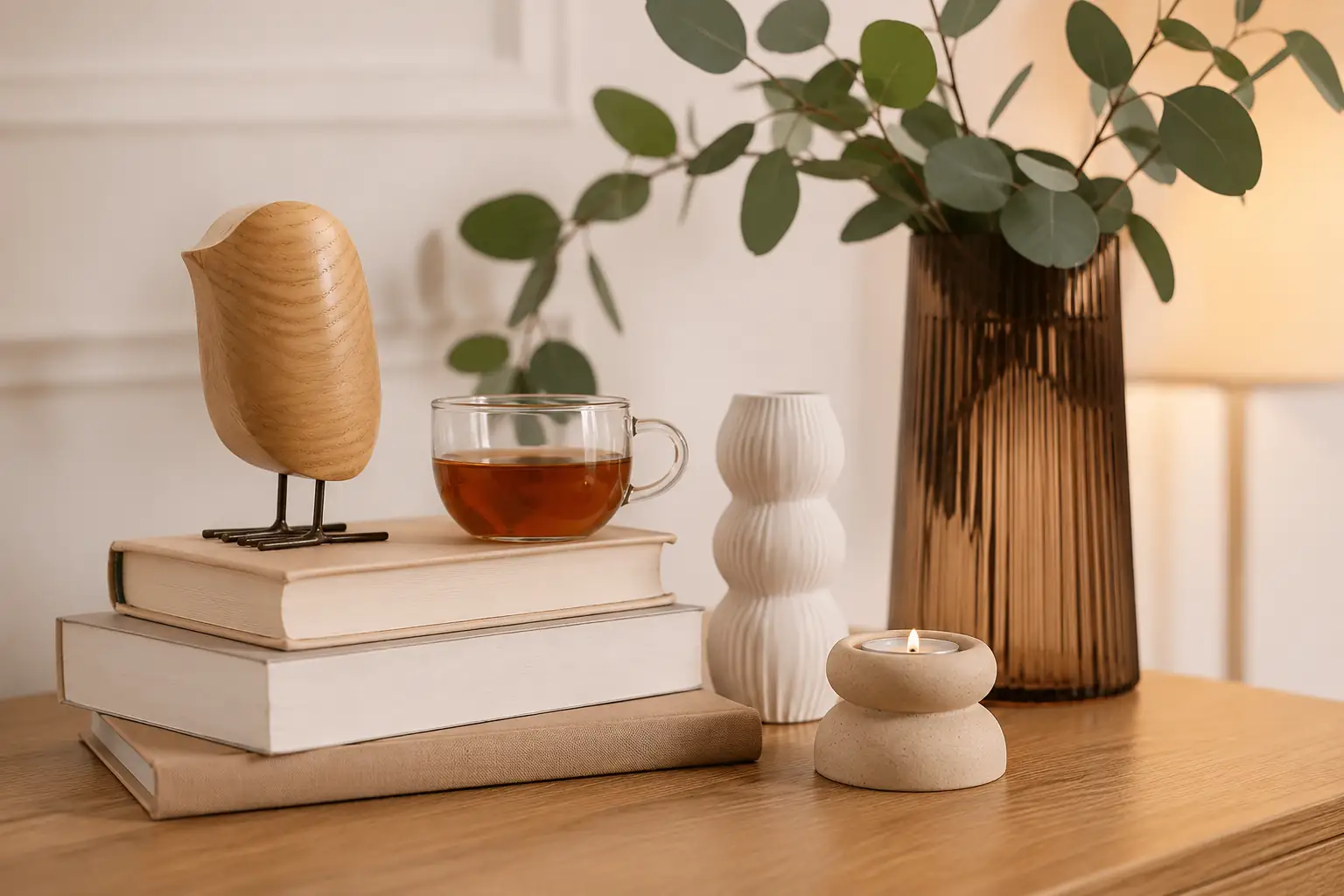
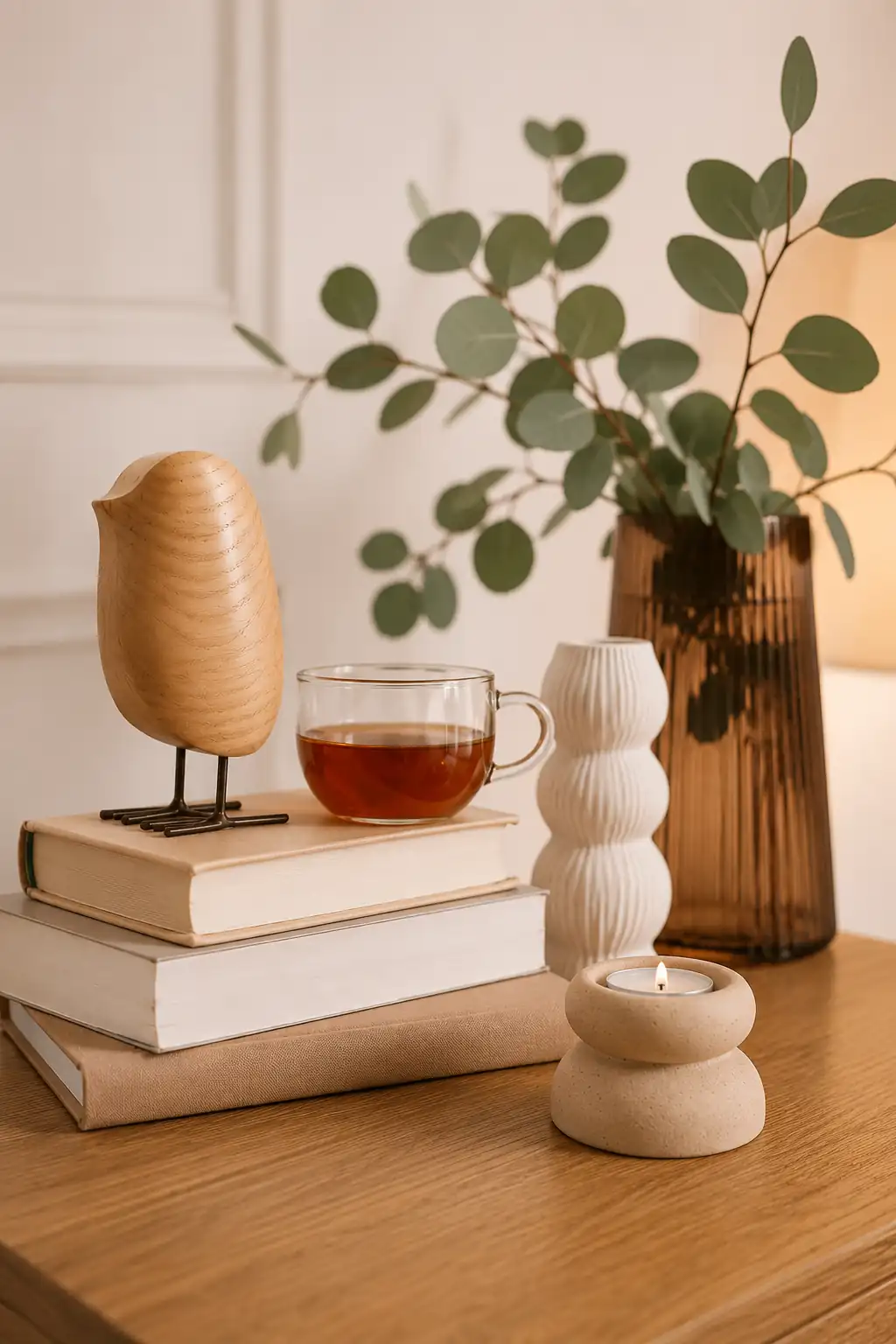



The 3-5-7 rule is a simple interior design idea that uses odd-numbered groupings to make rooms feel more balanced, natural, and visually engaging. By arranging décor in clusters of three, five, or seven and varying height, shape, texture, and material, homeowners can style coffee tables, shelves, consoles, cushions, and gallery walls more effectively.
Some of the best interior design ideas begin with understanding why some rooms feel right the moment you walk into them. The furniture is fine, the colours work, and yet the space feels flat or restless. More often than not, the problem is how the objects in it are arranged.
The 3-5-7 rule is one of the most useful interior design ideas for solving this issue without spending anything or making permanent changes.
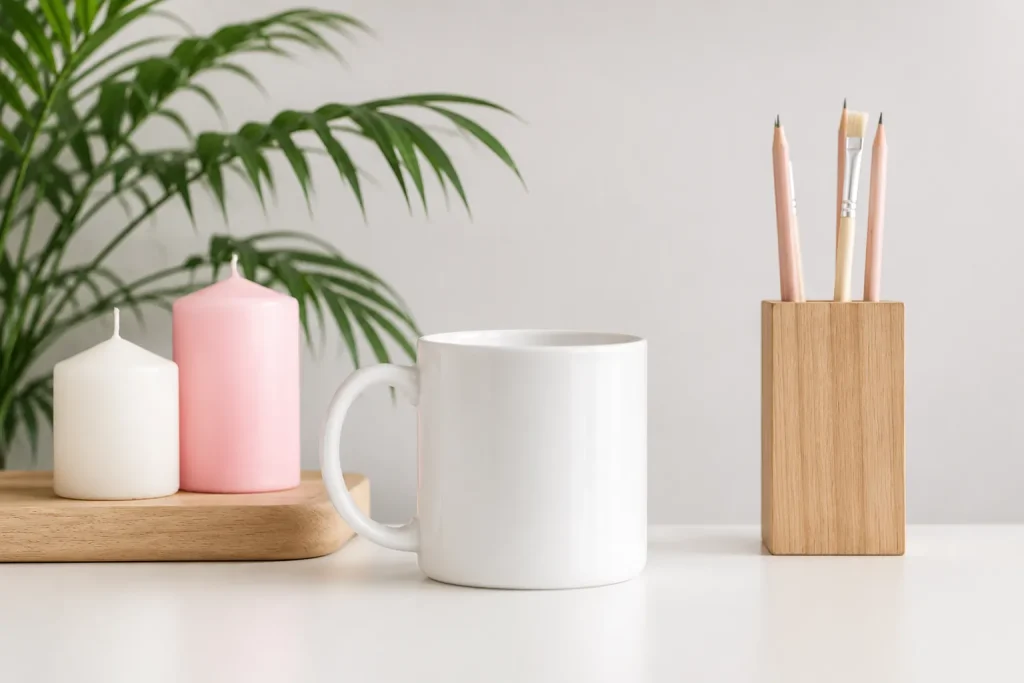
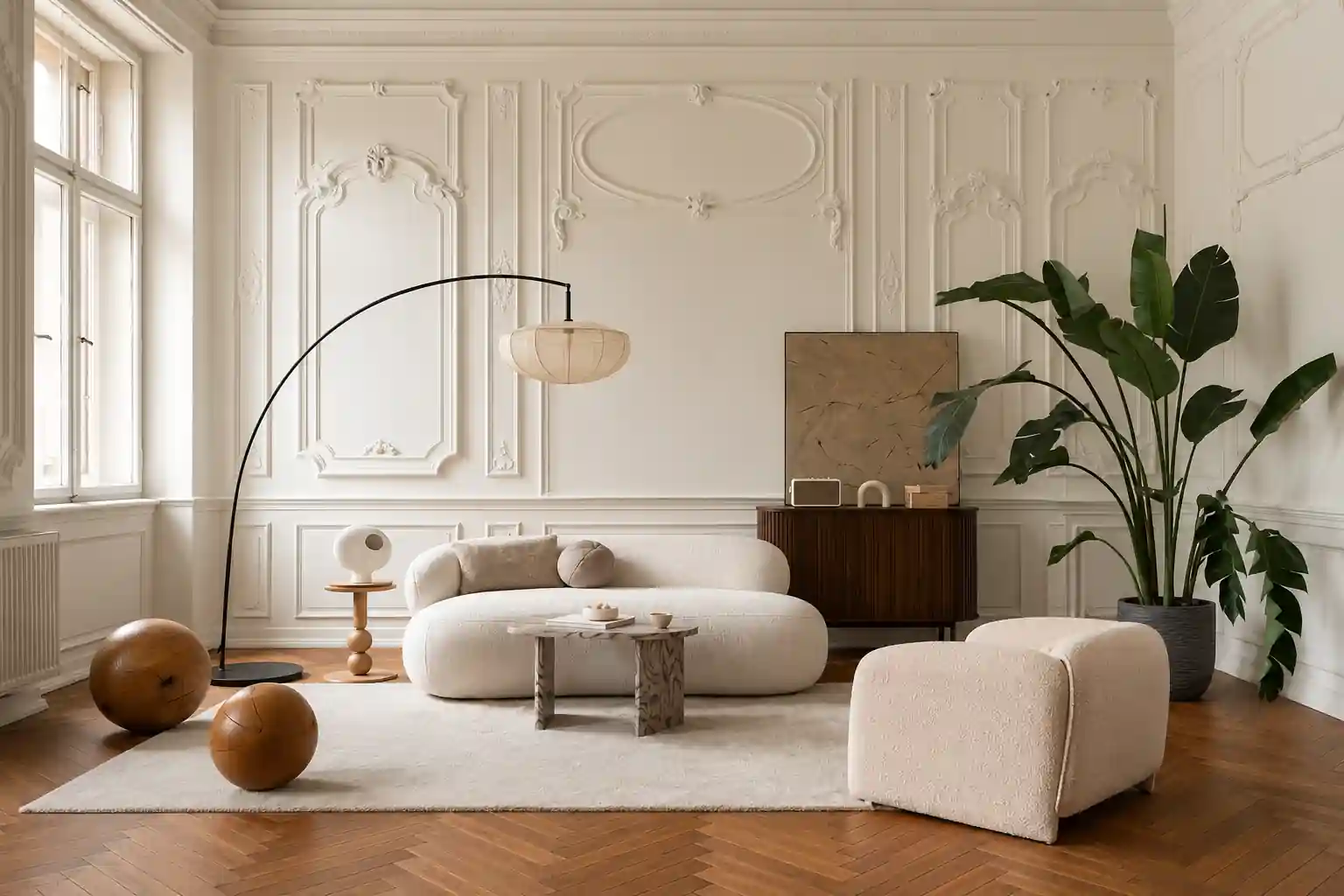
The 3-5-7 decorating rule is a styling principle built on a simple observation. Odd-numbered groupings of objects look more natural and visually engaging than even ones. Arrange two identical vases side by side, and the eye reads them as a matched pair and moves on. Arrange three objects of varying heights, and the eye moves between them, which creates the impression of a more dynamic composition.
The rule recommends grouping décor in clusters of three, five, or seven. Odd groupings resist perfect symmetry, and that asymmetry makes an arrangement feel interactive. This is one of the foundational principles of interior design used by professionals.
Many timeless interior design ideas favour odd-numbered arrangements because symmetry feels comfortable but static. Odd numbers resist easy resolution, which keeps the eye moving across a surface and makes the arrangement feel more engaging.
This is also why interior design ideas that rely heavily on matching pairs, two identical lamps, two matching cushions, two identical side tables, etc., can make a room feel like a hotel lobby rather than a home.
The 3-5-7 decorating rule works across almost every surface in a home. Practical interior design ideas include varying the height, shape, size, texture, and material within each grouping rather than repeating the same type of object.
A group of three works well here. One taller object like a candle or small vase, one mid-height like a small bowl or stack of books, and one flat element like a coaster set or a decorative tray.
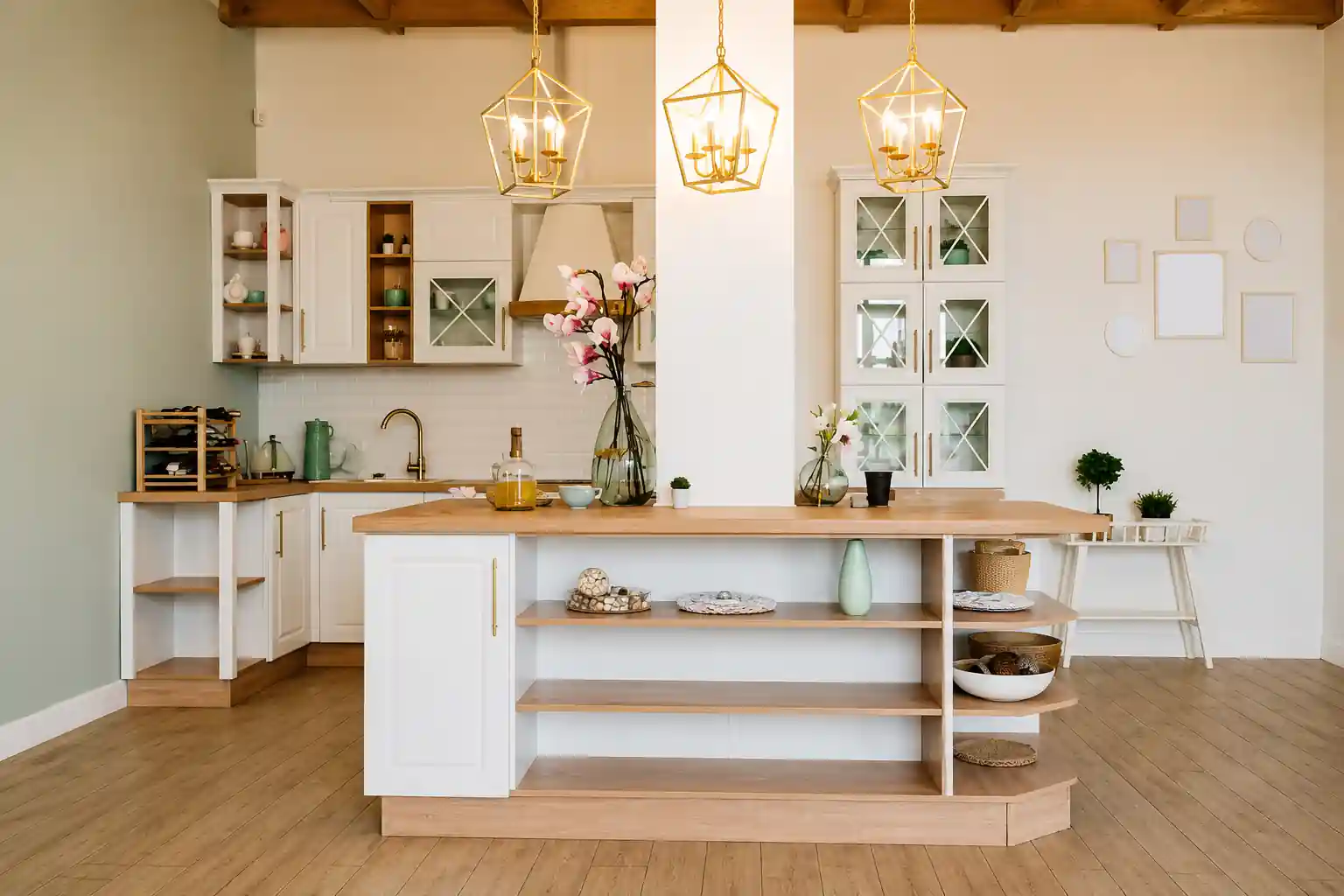
Arrange five objects across a shelf section. Mix books stacked horizontally with a small plant, a framed photograph, a ceramic object, and one empty space.
Try three cushions rather than two or four. A larger cushion in a textured fabric, a mid-sized one in a complementary pattern, and a smaller accent cushion in a contrasting colour. This is simple yet effective home-decorating advice that makes an immediate difference.
Try arranging five objects at varying heights. Anchor one end with something tall, work down in height toward the other end, and finish with a small plant or a flat decorative piece.
Seven frames arranged asymmetrically can make a gallery wall pop. Vary the frame sizes and orientations and leave deliberate breathing space between frames rather than clustering them together.
Like many successful interior design ideas, grouping only works if the objects within it are genuinely different from one another. Interior design rules around grouping consistently emphasise variation across these three dimensions:
At least two distinct heights within any group
Mix different shapes to engage the viewer
Combine at least two different surfaces within a group
Each object has something to offer that the others do not, forming an eye-catching showpiece.
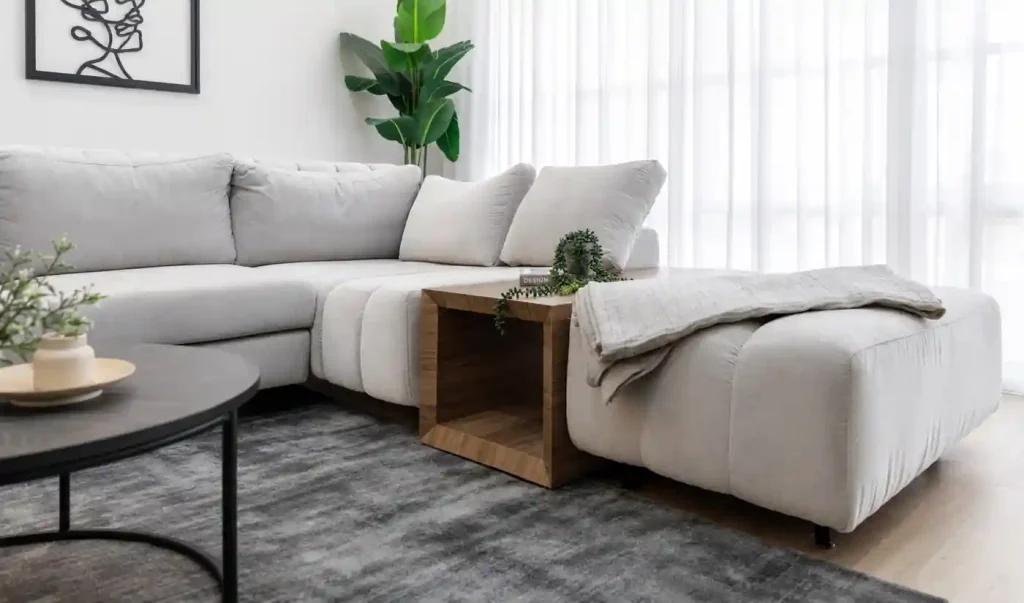
The 3-5-7 decorating rule is a starting point, not a constraint. On a very small surface like a bedside table, three objects may already be too many. On a large dining table centrepiece, seven may not be enough to fill the space without looking empty.
The underlying logic of the interior design plan is what matters: odd numbers and varied heights and shapes. It is also worth knowing that implementing this rule does not require new purchases. Rearranging what already exists in the home using these principles is often all it takes.
As urban Indians spent around 60% of their monthly consumption on non-food items, including furnishings and household goods, in 2023-24, the better question for many households is how to use what they already have more effectively. The 3-5-7 decorating rule is one of the simpler answers.
Interior design ideas that hold up over time are the ones grounded in visual logic rather than trend. The 3-5-7 rule works because it mirrors how the eye naturally reads a composition, with movement, variation, and moments of rest.
Bonito Designs brings detailed interior design plans to every project. Our Life Design approach means the home is designed around how the family uses each space daily. And this special care can sometimes be the biggest difference between a home that looks incomplete and one that feels perfect.
If you want your home designed with this level of attention throughout, book a consultation with Bonito Designs today.
The 3-5-7 rule is a decorating principle that suggests grouping décor items in odd numbers, such as 3, 5, or 7. These arrangements feel more natural, dynamic, and visually interesting than even-numbered groupings.
Odd numbers prevent a space from looking too symmetrical or static. They keep the eye moving across the arrangement, which makes the room feel more layered, relaxed, and engaging.
You can use the 3-5-7 rule on coffee tables, bookshelves, console tables, mantels, bedside tables, sofa cushions, and gallery walls. The key is to adjust the number of objects based on the surface area.
No, the rule can often be applied by rearranging items you already own. Mixing existing objects of different heights, shapes, materials, and textures can make a space feel more thoughtfully styled.
Yes, but it should be used carefully. In compact spaces, a group of three objects may work better than a group of five or seven, especially on smaller surfaces like bedside tables or narrow shelves.